
When a single product failure damages an entire household brand
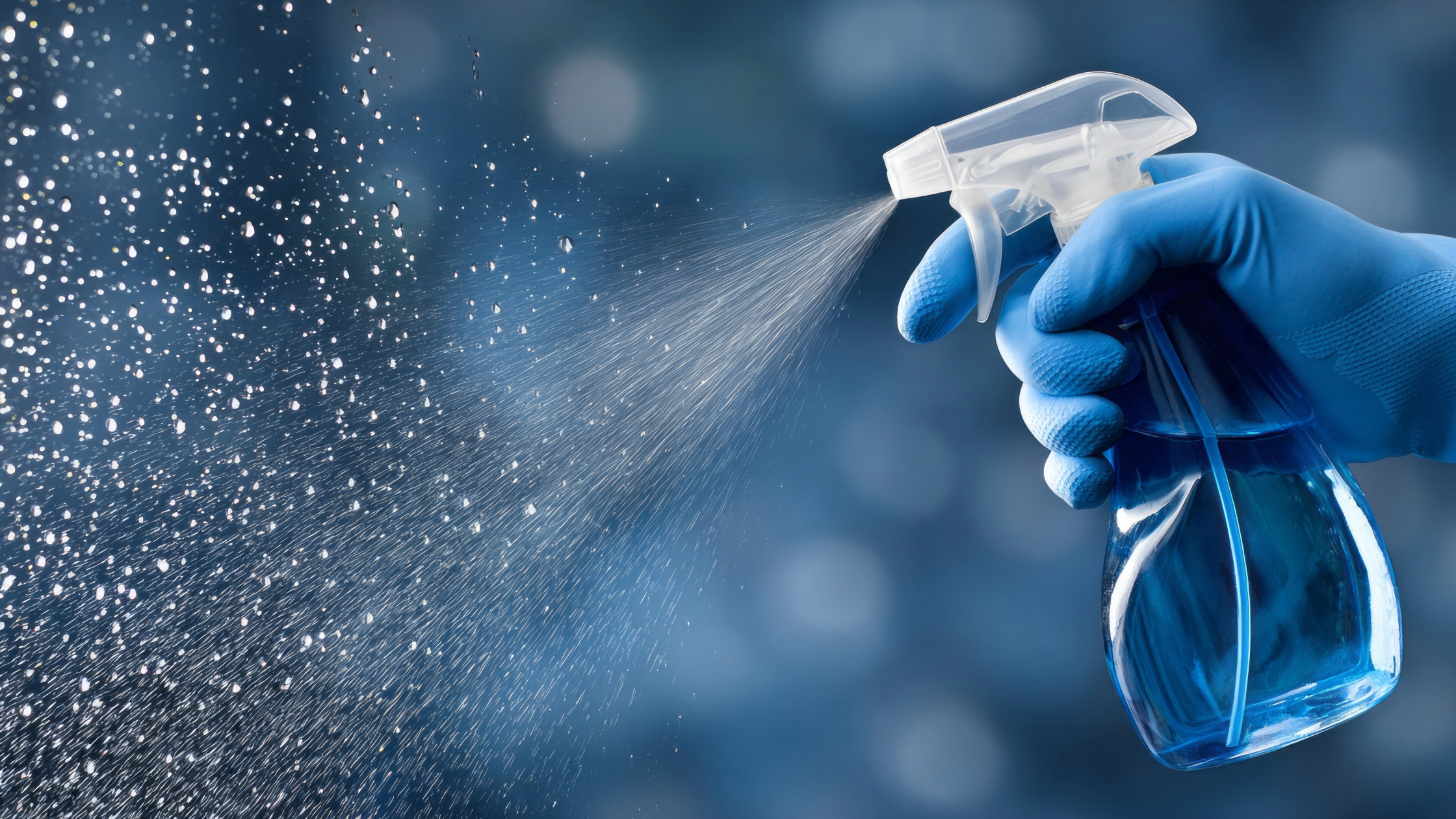
One leaking bottle. One batch that separates on the shelf. One product that leaves a streak across a kitchen surface when the label promises a flawless finish.
To the person holding it, that is a faulty product. To the brand behind it, it is a reputational event. And in a market as visible and tactile as household chemical products, reputational events travel fast.
When a cleaning product fails, they question the entire range. Research from UserTesting found that 59% of consumers remain loyal specifically because of consistent product quality. The opposite is equally true. Inconsistency in quality is one of the fastest routes to brand switching, and in a category built on habitual purchase, losing that habit is far harder to recover from than acquiring it.
What product failure actually looks like in household chemicals
Household product quality issues take many forms. Some are immediately obvious. A bottle seal that fails during transit, delivering a leaking product and a ruined delivery box. Foaming performance that falls short of what the pack describes. A fragrance that fades within days of opening, leaving the product smelling of nothing.
Others are not quite so obvious. Formulation drift across batches produces subtle texture inconsistencies in creams and liquids that consumers sense before they can articulate. Discolouration in a product sitting on a retail shelf signals instability. Residue left on surfaces after cleaning signals the wrong chemistry. Streaking on glass, damage to surfaces, separation in liquids that should be uniform.
Each failure mode carries a different risk profile. But they share one characteristic: they are all visible. Household cleaning products perform in front of people, in the spaces people care most about. Failure is public. And today the world we live in, public failure has a platform.
Social media has changed the scale of quality risk
A dissatisfied customer in 2005 told a handful of people. Today, they film it, caption it, and post it to an audience of thousands before the product hits the bin.
The household cleaning category is one of the most actively discussed on social platforms. #CleanTok has accumulated billions of views across TikTok, with consumers sharing product recommendations, real-time demonstrations, and increasingly, product complaints. A cleaning product that leaves streaks, smells wrong, or visibly separates in the bottle generates exactly the kind of content that platforms reward with reach.
So, why does this matter to household cleaning brands? Because the gap between a single batch quality issue and a viral complaint thread is now measured in hours. Product recalls across Europe exceeded 7,000 events in the first half of 2024 alone, with mislabelling and product inconsistency among the leading causes. The brands managing those events publicly are managing them in front of an audience with a very short memory for context and a very long memory for footage.
Quality failures begin upstream of the consumer
The failure a consumer experiences at home almost always has its origin much earlier in the supply chain. Batch inconsistency in household chemicals is rarely the result of a single dramatic error. It is usually the product of accumulated small compromises: a raw material substituted under supply pressure, a fill line running outside of validated parameters, a quality check skipped during a high-output run.
Multi-supplier manufacturing compounds this risk considerably. When different co-manufacturers produce the same product for the same brand, achieving genuine formulation consistency across every batch becomes a governance challenge as much as a technical one. Each site interprets the specification through its own equipment, its own team, and its own quality culture. The consumer receives the result of that variation.
Lack of batch traceability makes the situation considerably harder to manage. When a quality event occurs, the ability to identify the precise batch, isolate its source, and act quickly is the difference between a contained issue and a product withdrawal that draws regulatory scrutiny. Brands operating across multiple co-manufacturers, with fragmented documentation, often discover that traceability is a gap at exactly the moment they need it most.
Regulatory exposure sits inside every household chemical SKU
Household chemical products operate under significant regulatory obligations. CLP labelling requirements govern how hazardous substances are classified and communicated on pack. Safety data sheet accuracy is a legal requirement, and trading standards authorities actively investigate complaints that suggest mislabelled or incorrectly classified products reached consumers.
The consequences of compliance failure extend well beyond a product withdrawal. Research into brand trust in the FMCG sector consistently shows that 81% of consumers require confidence that a brand will do what is right before committing to repeat purchase. A regulatory breach communicates the opposite. It signals that the quality governance systems consumers assume are in place simply were not operating as they should have been.
For household brands carrying multiple SKUs across different product types, the compliance burden scales with the portfolio. Each new formulation, each new format, each new label variation carries its own classification requirement. Brands that manage this reactively rather than systemically carry considerably more risk than the product failure itself.
The cost of rebuilding consumer trust
Brand reputation in consumer cleaning products is built slowly and can erode very quickly. Academic research on brand trust and product failure shows that loyal customers sustain more damage from a brand transgression than first-time buyers, because the failure represents a broken promise rather than a bad first impression. The brands with the most to lose from a quality event are those that have worked hardest to earn the loyalty they hold.
Recovery from a visible product failure in the household category requires consistent, demonstrable quality over an extended period. It requires proactive communication with retail partners, who make ranging decisions based on consumer feedback as much as sales data. And it requires the manufacturing infrastructure to guarantee that the next batch does what the brand claims it does.
How Technikraft protects household brands against quality risk
Technikraft works with household, home care, and cleaning brands where product quality is a commercial asset to be protected. Our in-house R&D, validated formulation processes, full batch traceability, and CLP-compliant documentation give brands the quality assurance infrastructure to scale their ranges with confidence.
A product failure in this category carries consequences that reach far beyond the batch. We help brands ensure it never gets that far.
Get in touch with the Technikraft team to talk through how we protect household brand quality at scale.
